Why We Need Stories about Older Lesbians.

A number of readers said to me they loved Auntie Florrie from Encrypted Hearts. I’ll be honest; so did I. I would’ve loved her in my corner when I came out.

Some of you know I was struggling to write a contemporary romance. When I went on a Global Wordsmiths writing course in March, I discussed this with my editor, who encouraged me to write what I wanted to write. I said I had an idea for a short story, featuring Auntie Florrie. The idea… and the manuscript… kept growing, and now she has her own story, a dual timeline second chance romance, which throws us back into 1920s London and comes forward to 1950s Cambridge (UK) and France. One of the key things I wanted was to include Florrie as an older lesbian.

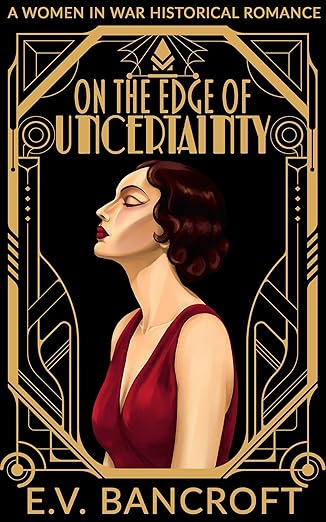
In the sapphic fiction world that’s slowly embracing diversity, older lesbians are still under-represented. I’m not sure if this is because younger readers don’t want to read about the middle-aged or the old, but certainly very few book covers will show older characters on the front. I put my hand up to doing this too. My latest book, On the Edge of Uncertainty, has a portrait of the young Diana in the 1920s, painted in the style of Tamara de Limpicka. Why? Because apparently no-one would pick up a book with a cover of a middle-aged woman.

The stories of younger sapphics are vital, but they’re not the whole picture. Queer women grow up and age. They love, lose, and love again, and drag along a whole truckload of baggage, in the form of family, children, exes and aging bodies. And yet, their stories are still so rarely told.

Post-menopausal Woman

Once a woman passes menopause, she’s often written out of romantic narratives, or there are “comic” references to hot flushes, but nothing else. Society ignores older women or writes them off as being crones. But love doesn’t disappear with age, nor wisdom. Desire doesn’t wither either. Older lesbian representation reminds us that connection, self-discovery, and passion are lifelong experiences. And there are advantages to growing older, the chief being not giving a damn what people think, or feeling you have to be seen somewhere, or do something. For me, for the first time in my life, I’m now actually doing exactly what I want to do: writing.

Older Women carry Queer History

Many older lesbians lived through times when queerness had to be hidden. In the UK, this was characterised by Section 28, when being out could cost you your job, your family, or your safety. Most of my contemporaries have stories of being closeted at work or not daring to come out until later in life. To this day, my father refuses to talk about my sexuality, and still refers to my ex as “that woman”, who he blames for corrupting his daughter. A lot of the freedom and acceptance we have today is because lesbians in the past refused to be silent and demanded to live authentically.

Older Representation

Representation in books shapes how we see ourselves and how society sees us. Without stories of older lesbians, we reinforce the idea that queer life stops being visible after a certain age. But when readers encounter women in their fifties, sixties, or beyond who are falling in love, living and thriving, it changes the narrative. It tells readers: You are still here. You still matter.

Connecting Generations

When I wrote Warm Pearls and Paper Cranes, which shows two women from their teens to their nineties, I wasn’t sure the older women would appeal to anyone, yet I’ve had a number of readers who’ve said how much they enjoyed seeing how it’s possible to live a full, authentic queer life, and how they can relate to some of the entrenched misogyny along the way. Others have said how they’ve loved being able to celebrate old queer women having a happy ever after.

Stories are how we make sense of who we are and who we can become. When older lesbians are missing from those stories, a vital part of our shared humanity is lost. We need more books that celebrate our heartbreaks, our complex lives, and our courage to love again.

Because representation isn’t just about being seen. It’s about being remembered. And it’s time older lesbians took our place in the stories we tell about love, life, and everything in between.
On the Ambivalence of Writing The End

Ordinarily I celebrate writing the words The End on a manuscript and bundling it off to my editors for the ritual shredding. After months of work, to finally get a draft completed is a relief and comes with a sense of pride at the achievement. Yet, this time there is also a sense of unease, bordering on sadness.

This last year has been particularly tough from a writing point of view. Having paddled in the historical romance arena for a few years, I had planned to write a contemporary series – of three lesbian couples who all live together in a large house, which they rename Yew Hall. I think I was more inspired by the joke than the detail, for although I had planned all three novels and the detail of the characters, when I started to write, the character who was supposed to be funny and light kept appearing as angry and frankly, unlikeable.

Maybe it was because I was struggling with the fatigue of long covid, or because of the cataclysm of world events, but it was hard to put my fingers to the keyboard and produce anything at all, and even worse, on the page the words were rambling and banal.

In March I attended a Global Wordsmiths writing retreat and explained my problems, how I’d lost my mojo and joy in writing. It had taken me six months to drag out 30,000 words and I couldn’t say I was happy with any of them.

“Why don’t you write what you want to write?” my editor asked, giving me permission to set aside the contemporary romance. I’d had an idea of writing another historical romance around Auntie Florrie, a secondary character in Encrypted Hearts. In there it was intimated she had worked in the publishing world in London in the 1920s.  It would make a great short story – perhaps 5,000 words. Immediately I got down to it and within a week I’d smashed through the 5,000 and had twenty thousand words settled down. Okay, it can be a novella, I thought.  At the end of the first draft it’s now sitting around 75,000 so it’s definitely a novel, called On The Edge of Uncertainty. I’m sure my editor will shave off some of my filler words and redundant dialogue tags, but it will be of that region.

The 1920s must have been such an exciting time to be writing, as people pushed back the strictures of the Edwardian and Victorian eras and writers and artists challenged the straight-laced art and writing and sexual mores that had gone before. One of my heroes from being a teenager was Virginia Woolf.  When I was a sixteen-year-old my mother encouraged me to read the essay A Room of One’s Own. She was trying to impress on me the importance of being a feminist, financially independent, and engaging in critical thought. Honestly, I was just as thrilled when I discovered Virgina Woolf had a same sex affair with Vita Sackville West. For me it was an exciting time – I loved school and discussing everything with my mum, who was finally well after having had a mental breakdown. It was just about a year between her being well and her death and it was one of the happiest times of my life – to be treated like an adult and learning about the world and challenging assumptions. It was the same love of life and feeling alive because of the intellectual stimulation that I wanted to bring out in Florrie’s initiation into the 1920s literary London.

Since March I have been dreaming of my characters and plot, as I’ve watched the story unfold, interrupt my sleep and impinge on my social life and I’ve loved having Florrie and Diana in my head – and Cam and Gloria of course. So finally saying goodbye to them leaves me feeling lost and listless. Even though it won’t hit the common beats of a romance, I wrote it because I felt compelled to write it.

So now I face the fear of what’s next. I have an idea for something completely different – a cosy(?) fantasy and I’ll get down to it on Monday. We’ll have to see if my muse, which was alive and well writing Florrie’s story, will desert me when I embark on something new and meet different characters.

Typing The End is a misnomer. Inevitably there are revisions and marketing that needs to be done, and the next idea calls to be explored. So, I’ll pause, take a breath before letting go of some of my favourite characters and release them into the world.

Choices and Consequences

Last week it was my birthday, and I had a lot of social events planned – mainly around seeing friends and dancing – all of which had to be cancelled as we picked up Covid. That in itself was disappointing and made me appreciate how much I enjoy spending time with “my people”.

Last time I succumbed to the virus after a few days, I was reading and writing, but this time, streaming eyes and a lowering headache prevented me from staring at a book for more than a few minutes at a time. So I’ve been listening to lots of audiobooks and watching/ listening to reruns of The West Wing, which must be one of the best TV series ever.


If we ever needed honesty and integrity in politics it is now. Whatever happens in the USA ripples around the world, so for the sake of democracy I ask all my American friends to vote.


In the West Wing, C.J. Cregg is still my favourite character because she is a professional woman holding her own amongst the men. At the time it first aired I was in a similar position in the corporate world and it was heartening to have a role model. Except I was also going through a divorce and trying to wrangle a young daughter simultaneously.

I stopped watching sometime in the third or fourth season as
a) I had even less time for leisure, and
b) none of the characters seemed to be able to sustain a relationship, as if they could not have that and a career, and that was too depressing to contemplate. I wanted it all.

For a while I had it: a relationship with a fabulous woman, a daughter and a high powered career flying around the world. But I was spread so thin with conflicting demands that it all got to me and ultimately I gave none of them the attention they deserved. I left my corporate role and set up a business with my partner, which turned into a disaster for our relationship and meant I had little time for my daughter when she was struggling with her emotional health. It’s something I regret but I cannot redo that time, but it does mean now I try and think of the long term impacts when I make a choice.


Sometimes we don’t know what the best choice is, or we are beset with unintended consequences.
We can have the best of intentions but the reality doesn’t necessarily match up with the expectations.


Life is full of choices and consequences. Are there any choices you made that had an unintended impact? Now when I make a choice I always consider if I can live with the fall out. In the meantime I’ll be holding my breath as the USA decides and the world has to deal with the consequences.

Could you be a Code Breaker?

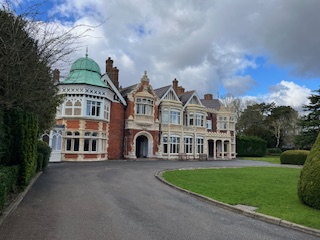
Encrypted Hearts will be released on 1st December about two code breakers based at Bletchley Park during WW2. Here is the blurb:

Cam Langley, a sharp-witted codebreaker at Bletchley Park, dresses like a man but makes no secret of who she is. Gloria Edwards, eager to escape her domineering father, joins the war effort and is quickly drawn into Cam’s orbit.
Cam feels an immediate attraction, while Gloria is caught off guard, having only ever been with men. As they form a formidable team, their connection deepens, but a spy within Bletchley threatens to destroy everything.
With secrets swirling, can they survive the chaos of war, or will danger tear them apart?

Doing the research for this book has been fascinating – there are so many stories of codebreakers coming across a solution almost by chance – and hard work, yet they were never acknowledged at the time. Amazingly the secret that the enigma code had been broken was never divulged, and it wasn’t until thirty years after the end of the war that the significance of Bletchley Park was recognised. It was a place of secrets and lies…

Puzzles for Prizes!

For a bit of fun I thought I’d produce ten puzzles to be solved, which will be released before the publication date and can be viewed on the website/blog. Be warned, some are more difficult than others!

Cryptogram puzzle 1

Email me your completed puzzles to e.v.bancroft.writer(at)gmail.com by 10am December 3rd 2024, UK time. Every puzzle completed correctly will be entered into a draw and one winner will win an ebook on release in December for each of the puzzles.

If you complete all ten puzzles correctly they will be entered into a grand draw to win a signed copy of all the paperback books in the Women in War series: Warm Pearls and Paper Cranes, Virgin Flight and Encrypted Hearts. I’ll even pay for the postage world wide!!

Answers will be published on the blog on 10th December and winners will be notified by email as soon as possible thereafter.

What if I Hate Puzzles?

Don’t worry – if you hate puzzles there aren’t any included in the Encrypted Hearts book, but I wanted to simulate the experience of having to decrypt codes!

Good Luck!

Who Remembers the Forgotten Pilots?

Photo of Joan Hughes by a Stirling Bomber she piloted in WW2

I’m really looking forward to you meeting Odette and Beryl when Virgin Flight is released into the world on 1st December. It’s available to pre-order now on mybook.to/VirginFlight.  It was such a joy to write and I was reluctant to let the characters go.  In fact, I still miss them.

The early reviews coming through are phenomenal, and I’m delighted that readers are enjoying their story as much as I enjoyed living it and retelling it.  For those of you who don’t read historical fiction, maybe you can think of the book as a slow burn romance with adventures in aeroplanes set a number of years ago :0)?

History gives us an insight into the past, shows lessons we may learn and gives us context for current events.  It doesn’t have to be depressing either. I’m fascinated by the WW2 period, not because of the war, but because women were finally given opportunities that wouldn’t otherwise have been available to them. And they rose to the challenge.

We also need stories about people overcoming adversity and thriving despite that. The themes of love and loss are universal and endure throughout time. So yes, Virgin Flight is about women who fly during WW2, delivering the planes needed by the RAF. An Air Transport Auxiliary (ATA) Pilot could be flying a damaged bomber one flight and a pristine Spitfire from the factory the next, and they could fly five or six deliveries a day from sun up to half an hour before dark, so they were long days.

I’ve nothing but admiration for the women pilots, many of whom hadn’t flown before the war, and some of whom never flew again afterwards. Sadly, the misogyny returned once the war was over. The women who impressed me the most were those who went on and found ways to continue flying despite the prejudice against taking on female pilots by the big airlines.  ATA pilots like Diana Barnato Walker, who was the first British woman to break the sound barrier, Joan Hughes, who became a stunt pilot for films and Mary Ellis who later became Managing Director of Sandown airport were exceptional in that they continued to fly after the war.

As part of my research, I visited the Air Transport Auxiliary Museum, in Maidenhead, near the Head Quarters aerodrome of White Waltham. I thoroughly enjoyed seeing artefacts and reading extra details that you can’t get in books. And did I need to have a go in the Spitfire simulator? Of course I did! When I was younger (and had more money!) I used to fly light aircraft and microlights, but the speed with which the “spitfire” covered the ground, and the extent of the poor visibility surprised me. My esteem for the pilots went up threefold.

For this remembrance weekend (Veteran’s Day in the US) I honour all those courageous women who risked their lives every time they flew, relying solely on a map and compass, without the aid of  flying instruments or radios.  They frequently faced poor weather as they undertook their assigned deliveries.  The ATA were sometimes described as the forgotten pilots as they didn’t get the media attention given to the RAF pilots. They are not forgotten.

What’s the Inspiration For a Story?

Recently, I’ve been delighted to be invited to speak and read from my books and answer questions. One question that comes up quite regularly is, “Where I get the inspiration for my stories, is it a location, or a character?”

I know some people hear (or see) a character and how they behave in the world, but for me it is a situation, a challenge or conflict and I start thinking, “what if?”

My debut novel, Warm Pearls and Paper Cranes was prompted because one of my aunts instructed that she be buried with her housemate and friend rather than in the family plot. They weren’t lesbians, but I thought what if? What if two women had hidden their relationship from everyone for years, what would happen if they were put into different care homes? What if they were estranged from their relatives because they hadn’t been honest about who they were?

This book is also close to my heart as I became more distant from my aunt as she was very religious and didn’t approve of my lifestyle, and had always planned to reconnect when I had more time. So, I guess it was a way of trying to seek resolution, or absolution, for not getting to see her before she died. At least in Warm Pearls there is a happy ending and Maud is reconciled to her niece, Hannah.

Of Light and Love was inspired by an artist friend who was losing her eyesight and couldn’t paint any more. How gutting it must be to no longer do what you had devoted your life to, what gave you your sense of purpose and identity. What if you couldn’t paint anymore? Because the novel was a romance it seemed appropriate Caro had lost her muse. And because everyone loves a grumpy and sunshine, she needed a counterpoint to her grumpiness in the form of Laura. Of course, Laura also has a depth to her and her sunshine is often an act to cover up her hurt.

My newest release, Green for Love is an enemies-to-lovers story featuring an eco-warrior versus an oil executive. They meet in a high-end women’s only club and really click emotionally. Then they discover who the other is, and it all goes wrong with a clash of their different values and approach to life.

What was the inspiration? I was dating a woman and it seemed to be going well. We’d got to the third date and, being curious, I asked if she thought that her eco activism was effective, as I was genuinely interested. It was clearly the wrong thing to say. I had intended it as a conversation opener, not the fizzling end of what could be. Needless to say, we didn’t see each other again.

They say you should weave your life disappointments into your stories, so that became the nub of the conflict. Maybe there was a hangover though, as it took time and a rethink of one of the characters, because I didn’t like her in the first draft. Some authors can write someone they don’t like. I can’t.

It took a rewrite, after discussions with my editor, to really get under Lia’s skin, to hear her voice and understand where she was coming from, to really engage with her softer side. I think the story is so much stronger because of that, and certainly the early reviews bear that out. It’s available now on Amazon and Kindle Unlimited so you can check it out.

Has a particular incident spurred you to write, or wonder, “what if?”

Is there still a need for Sapphic Fiction?

In my book group, it was my turn to choose the book this time. Naturally I chose an independent sapphic book, with the intention of trying to encourage my fellow readers to dip their toes into the waters of sapphic fiction. We had a discussion of the last lesfic book they had read, Jane Rule’s Desert of the Heart, which is probably as old as I am!

Sadly, I don’t think I converted anyone.  They said the book I chose was light and predictable.  It was a romance and by definition a romance should have a happy ending. As a group they’re used to reading literary fiction and they expected twists and turns and depth, so I guess they’re not used to the tropes and expectations of the genre. They would expect a mystery to solve the mystery at the end, surely?

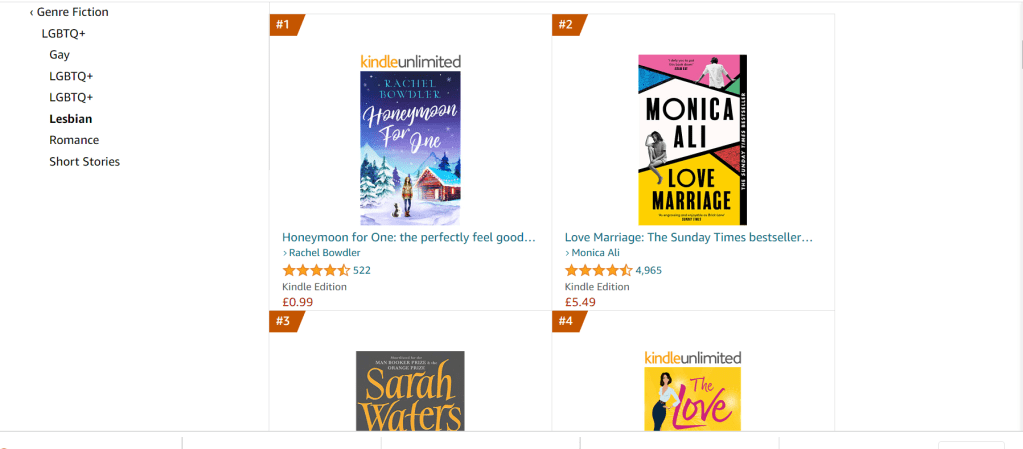
Someone posed the question about whether there is a need for independent sapphic fiction any more. By inference there are so many sapphic themed books in the mainstream now it’s not necessary to have a separate genre. Certainly judging by the number of mainstream novels in the Amazon top 100 lesbian fiction bestsellers, they do seem to be pushing out the independent sapphic books.

I think it’s great that people can go into a bookshop and pick up a sapphic themed book, whether that’s from a mainstream publisher or an independent publisher, but the independent publishers will never get full access to the main shelves because those are tied up with the top publishers ( in the same way that the big music publishers gain access to the radio air lists).

So do we need an independent sapphic genre with publishing done by independent authors or small publishing houses? Yes we do, in my opinion, for the following reasons:

  1. Mainstream sapphic literature is written primarily by mainly white women of a certain age from the UK or USA. Whereas independent Sapphic fiction gives a voice and resonance to  the diversity of cultures and different identities within the term sapphic.
  2. Mainstream sapphic fiction is produced by large publishing houses who are primarily concerned with the profits they will make, therefore will tend towards what will appeal to the mass market (as happens in the movie business and the music business). Independent authors can and should include the range of diverse opinions and stories and take bigger risks in what they write and publish.
  3. Most of the mainstream books in the Amazon top 100 lesbian books are certainly less predictable than the sapphic fiction, but they are also much more likely to have an ambiguous or unhappy ending. As a community we need to have books dealing with life’s struggles with happy endings and believe we can walk off into the sunset holding hands.

If mainstream sapphic fiction truly embraced diversity and life affirming novels then maybe we wouldn’t need a separate shelf for sapphic fiction, but sadly people seem to be becoming entrenched in their reading (and watching and voting) habits rather than being open to discussing a different viewpoint. So I shall continue to read the literary fiction and sapphic fiction, both of which I love, and next time it’s my turn to choose a book I shall select another independent sapphic book for them to read and appraise. Maybe one day they will pick up another sapphic book and enjoy it. I can hope.

Why Bother With New Year’s Resolutions…

Distracting The Princess from the sounds of fireworks on New Year's Eve

…if 64% of us will abandon them within one month of making them? Over the years I have repeatedly vowed to get fitter and lose weight and I’m still only seven pounds lighter than I’ve ever been. Admittedly, post menopause it’s fighting hormones (or lack of them) and the lowering of metabolism, but that doesn’t mean I should give up completely, does it?

My professional career was governed by goals, so much so I sweat and my pulse rises if I think I’m going to miss a deadline. There aren’t huge consequences if what I’m working on is delayed now, but I still feel agitated with anxiety. Not that I’ll give up.

I’ve made resolutions again this year in different areas of my life, including wanting to publish two books this year.

At New Year’s Eve we took stock of the last twelve months. This is probably the most useful part of the process, to reflect on what we’re grateful for and acknowledging the losses or disappointments.

For me the highlights were seeing my daughter graduate and having my debut novel, Warm Pearls and Paper Cranes, being given a Golden Crown Literary Society (Goldie) award. They were special particularly as my daughter struggles with her mental health and I was delighted she completed her degree despite that. For Warm Pearls I had no expectations that a dual timeline historical romance would be received as well as it was, as I was writing what I wanted to read and I’m so glad that others seemed to share that.

The Sapphic fiction books that left me thinking and therefore I enjoyed the most in 2022 were, in no particular order:

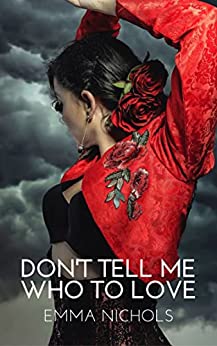
Don’t Tell Me Who To Love by Emma Nichols. I love the sensuousness of Emma’s writing and her descriptions of Granada were delicious. I could almost imagine myself looking out towards the Alhambra and feel the claustrophobia of family expectations.

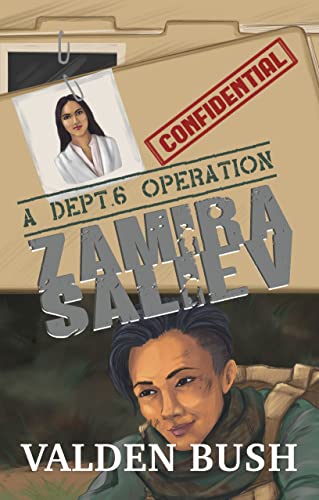
Zamira Saliev by Valden Bush. Valden has a real talent for writing a gripping adventure story and expertly wove in a sweet romance between two unlikely characters.

Dead Letters from Paradise by Ann McMan. It would come under the title of mystery, but I love that Ann is a master at writing about dark subjects with humour and compassion.

Curious Wine by Katherine V Forrest. This was a reread this year, as two people I interviewed for my newsletter both said it was one of their favourite books. Despite being written in the early 80s, it still holds up and the characters are as fresh as ever and her writing is beautiful.

No Strings by Lucy Bexley. This is laugh out loud at times, and again I loved the comments about difficult subjects.

The Caphenon by Fletcher Delancey. This was a re-read and one of my comfort reads. Honestly wouldn’t it be fabulous to live in a place with a strong compassionate female leader who puts the good of the country before her own personal needs?

And my favourite audiobooks were:

A Whisper of Solace by Milena McKay. I resisted this for a while as I assumed it was all hype, and honestly did the world really need another Hollywood Ice Queen? I’m so glad I did as Milena shreds the typical tropes and grabs us by the throat with the emotional journey.

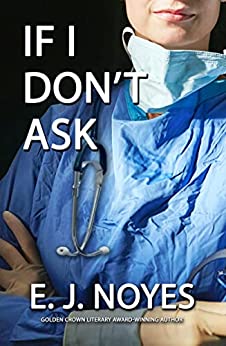
If I Don’t Ask by E.J.Noyes. Okay, I’m a sucker for Abby Craden voicing Rebecca Keane. Who cares if we know the story, it was interesting to get a different perspective and more back story, this was cat nip.

Sharing New Year’s Eve with friends, I loved exploring their hopes for the next year and relished the opportunity to have an in-depth conversation about their goals, desires and what makes them tick. It was also great to play with The Princess and try and distract her from the sounds of exploding fireworks.

Have a healthy and prosperous 2023 and thank you for reading and supporting my writing.

A League Of Their Own, The Queen and me

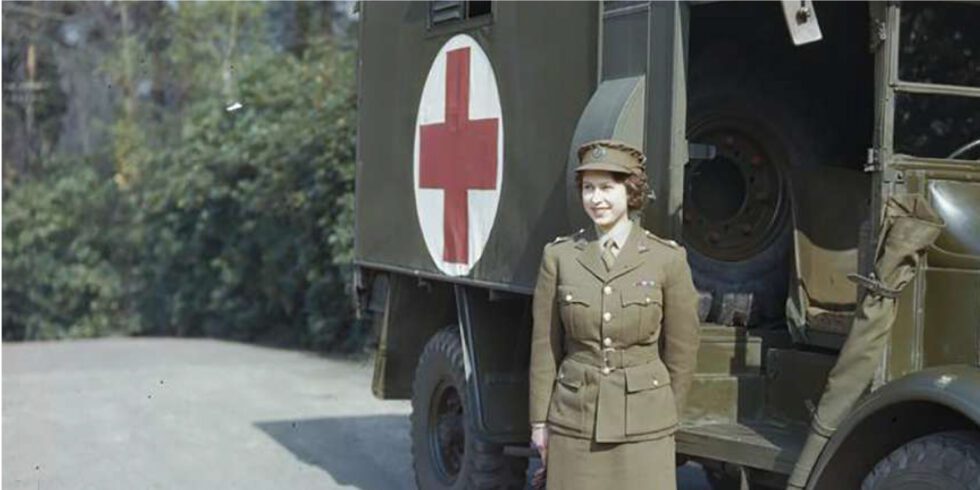
Princess Elizabeth ( later Queen Elizabeth II) as an ambulance driver during WW2

Whatever your views on monarchy there is little doubt the passing of Queen Elizabeth II signifies the end of an era. For a 96-year-old woman to continue working for her country is phenomenal. She devoted her life to her service, which seemed to be a facet of the war generation who put duty first.

When I was doing research for my debut novel, Warm Pearls And Paper Cranes, I interviewed people who lived through WWII and the theme through all the narratives was the overriding sense of duty, of putting their needs aside for the greater good. This was something Maud held true to, just like the Queen.

Despite her wealth and power, the Queen had very little wriggle room to express herself, and she was supposed to be entirely neutral. I love that she engaged in a little humorous subterfuge, making political comments even though she never said a word out of place. For example, she wore a brooch given to her by the Obamas, when she met Trump; she wore a floral blue and yellow hat that looked like the European flag in post Brexit Britain; and drove the Saudi prince herself in her Land Rover. I also wonder if Paddington Bear coming to tea for the Jubilee was not just about the joke about what she had in her handbag, but also that she welcomed the bear from Peru, the refugee, at a time when the Government is making refugees criminals and deporting them to Rwanda, rather than treating them with the compassion and respect they deserve.

The lack of expression and opportunities was even more so with ordinary people. Ironically, women were only given opportunities because of war, whether that was jobs or unchaperoned access to a social life, and there would’ve been no women’s baseball team if it hadn’t been for the Second World War.

Like any self-respecting lesbian, I devoured the series A League Of Their Own desperate for queer representation on the small screen. The storyline that resonated most was that of Max and Clance, their wonderful friendship, and battling for representation and access to equal opportunities, which was denied them, despite there being an edict to help the war effort.

Although there are more opportunities for people now irrespective of race, gender, sexual orientation than there were when the Queen served as an ambulance driver during the war, we need to cling onto our rights and push for those who are denied to be who they truly are.

I did not Queue (capitalised of course) for hours to see the coffin, but I do mourn the end of the second Elizabethan age, and rue the passing of the putting-others-first war generation, and hope that we will continue to approach life with discussion across the divide and retain a sense of humour.

Of Art and Artists…

Gentileschi, Artemisia; Self Portrait as Saint Catherine of Alexandria; The National Gallery, London; http://www.artuk.org/artworks/self-portrait-as-saint-catherine-of-alexandria-243732

Last week I completed the final edits on my new novel, Of Light and Love, which tells the story of a famous artist, Caro, who loses her muse when her wife dies and she can no longer paint. She has to resort to letting out a room to a younger woman, Laura, who is studying animation. It is a sapphic age gap romance, and also gave me an excuse to explore the nature of art. Naturally it required a lot of (extra) research, which was interesting, although most never reaches the page.

I thought it would be fun to include some of the paintings referred to in the book. The main picture is by Artemisia Gentileschi, who is Caro’s hero (and mine). She was an amazingly resilient woman, and despite a traumatic life she painted until old age with passion and sensitivity. Caro and Laura travel to the National Gallery in London and rave over the painting above.

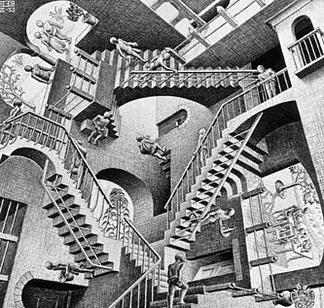
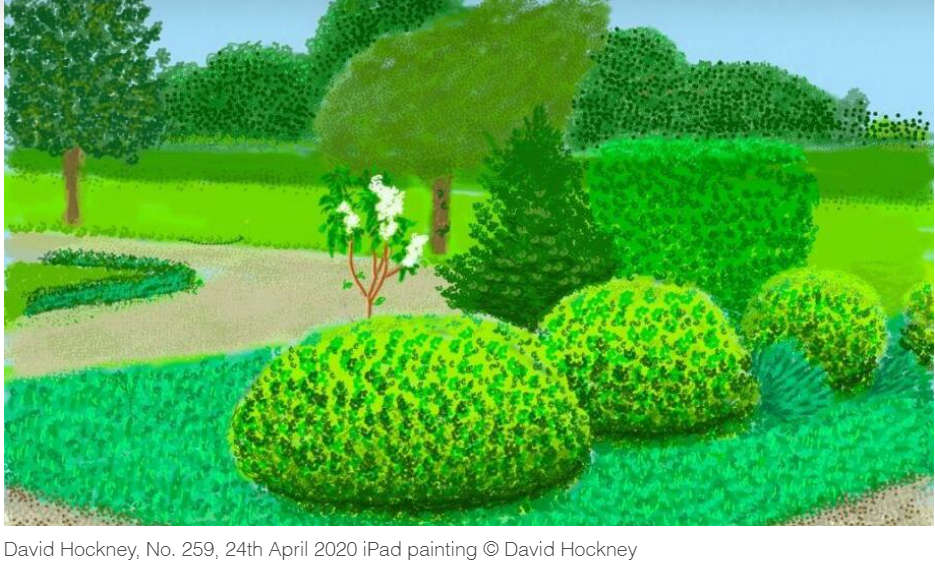
Three other paintings mentioned in the book are Escher’s staircases as depicted in Relativity, which distorts perspectives and gravity; what should be coming up is going down etc. This is how Caro feels some of the time, following the death of her wife. The next painting also features a staircase, and is Duchamp’s Nude Descending a Staircase. This was one of the first representations of movement in a painting. Caro decides she’d like to paint Laura as she dances around the kitchen when she’s cooking. The final painting shown above is one of a series of paintings by David Hockney, done during lockdown on an iPad. Laura and Caro have a “discussion” about whether you can really paint using digital media. Caro is not impressed.

Anyway, fingers crossed Of Light and Love will be out in September. In the meantime if you would like a free story, do sign up for my quarterly newsletter. Follow this link http://eepurl.com/h2Bien and receive a free copy of When Hannah met Suki. Hannah and Suki are two main characters from my debut novel Warm Pearls and Paper Cranes.

Cover for When Hannah met Suki